
Global Edition Independent Industrial PPE Intelligence
PPE Stocks · 5Y
MMM (NYSE) 5Y +10.70% ▲
HON (NASDAQ) 5Y -4.91% ▼
MSA (NYSE) 5Y +18.20% ▲
DD (NYSE) 5Y +49.31% ▲
LAKE (NASDAQ) 5Y -49.26% ▼
APT (NYSE American) 5Y -33.67% ▼
ANN (ASX) 5Y +4.05% ▲
GNTX (NASDAQ) 5Y -28.32% ▼
MMM (NYSE) 5Y +10.70% ▲
HON (NASDAQ) 5Y -4.91% ▼
MSA (NYSE) 5Y +18.20% ▲
DD (NYSE) 5Y +49.31% ▲
LAKE (NASDAQ) 5Y -49.26% ▼
APT (NYSE American) 5Y -33.67% ▼
ANN (ASX) 5Y +4.05% ▲
GNTX (NASDAQ) 5Y -28.32% ▼
COMPANIES · 5Y
3M Company 5Y +10.70% ▲
MSA Safety Incorporated 5Y +18.20% ▲
DuPont de Nemours, Inc. 5Y +49.31% ▲
Lakeland Industries, Inc. 5Y -49.26% ▼
Alpha Pro Tech, Ltd. 5Y -33.67% ▼
Ansell Limited 5Y +4.05% ▲
Gentex Corporation 5Y -28.32% ▼
PPE Report • Global Industry Newsroom

The Global Source for PPE News, Products & Industry Intelligence

PPE Report brings together the latest news, products, innovations and industry developments from the world of personal protective equipment. We cover manufacturers, technologies, regulations, markets and trends to help professionals stay informed about the PPE industry worldwide.

  Latest

Inside the PPE Report

Latest Reports

Special Report

The Safety Vest Is Changing

Five trends are reshaping high-visibility PPE, from breathable materials and fit to multi-hazard garments and connected technology.

September 20, 2026
Read story →
Corporate News

U-Power Acquires KÜBLER

A major European workwear transaction brings footwear and protective workwear capabilities under one group.

September 13, 2026
Read story →
Events

EuroSafety 2026

Coverage of the Scandinavian occupational health and safety event in Tampere, Finland.

September 8–10, 2026
Event coverage →
Industry Intelligence

Follow the PPE Market

Use the market dashboard below for PPE-related company performance and selected material indicators.

PPE Report Market Intelligence
View market intelligence →
PPE Market Intelligence & Commodity Index
5-Year Industry Indicators (2021–2026)
PPE Global Safety Sector Index
1,482.60 +48.2% (5y)

Timeframe: 5 Years (2021–2026)

2021 2022 2023 2024 2025 2026
Source: S&P Global
Cotton Futures (Textiles)
78.42 USd/lb -12.4% (5y)

Workwear fabric costs | 5 Years (2021–2026)

2021 2022 2023 2024 2025 2026
Source: ICE Cotton Futures
Polypropylene (PP)
$1,120 /MT -18.5% (5y)

Non-woven masks & suits | 5 Years (2021–2026)

2021 2022 2023 2024 2025 2026
Source: S&P Global Commodity Insights
Nitrile Rubber Latex
$1,050 /MT -47.5% (5y)

Protective glove supply | 5 Years (2021–2026)

2021 2022 2023 2024 2025 2026
Source: ICIS Market Data

PPE Report Editorial Desk

Independent coverage of personal protective equipment, occupational safety, products, technologies, standards, manufacturers, markets and industry developments.

Where Workplace Safety Violations Are Still Concentrated: What OSHA's Latest Top 10 Shows

Share this story

OSHA's latest published Top 10 list provides a useful snapshot of the workplace hazards most frequently cited during federal OSHA inspections for fiscal year 2025.

Fall protection remained at the top, while respiratory protection and eye and face protection also appeared among the ten most frequently cited standards.

What OSHA's FY2025 Top 10 shows

OSHA's FY2025 list places the following standards among the most frequently cited during federal OSHA inspections:

  1. Fall Protection
  2. Hazard Communication
  3. Ladders
  4. Lockout/Tagout
  5. Respiratory Protection
  6. Scaffolding
  7. Fall Protection Training
  8. Powered Industrial Trucks
  9. Eye and Face Protection
  10. Machine Guarding

What does the list tell PPE professionals?

The OSHA list is more than a ranking of frequently cited standards. It also shows how workplace protection extends beyond PPE alone.

Respiratory protection and eye and face protection are directly relevant PPE categories, while fall protection demonstrates that workplace protection also depends on equipment, procedures, training and the overall safety system.

PPE cannot compensate for a weak safety system

A worker may have access to appropriate PPE and still face significant workplace risks if hazards are not properly identified, controlled and managed.

OSHA's Top 10 therefore provides a useful reminder that PPE should be considered as one part of a broader hierarchy of workplace controls. Engineering controls, administrative controls, training, safe work practices and appropriate PPE all have a role in reducing workplace risk.

Why the data matters for PPE professionals

For PPE manufacturers, safety managers and occupational safety professionals, the list highlights several areas where protective equipment remains closely connected to recurring workplace hazards.

Respiratory protection and eye and face protection appear directly in the Top 10, while fall protection and other frequently cited standards illustrate the wider safety environment in which PPE is selected and used.

The bigger takeaway is that PPE should not be viewed in isolation. Effective workplace protection starts with understanding the hazard and applying the appropriate combination of controls, equipment and training.

Source: U.S. Occupational Safety and Health Administration (OSHA), “Top 10 Most Frequently Cited Standards — Fiscal Year 2025.”

View the official OSHA FY2025 Top 10 list ↗
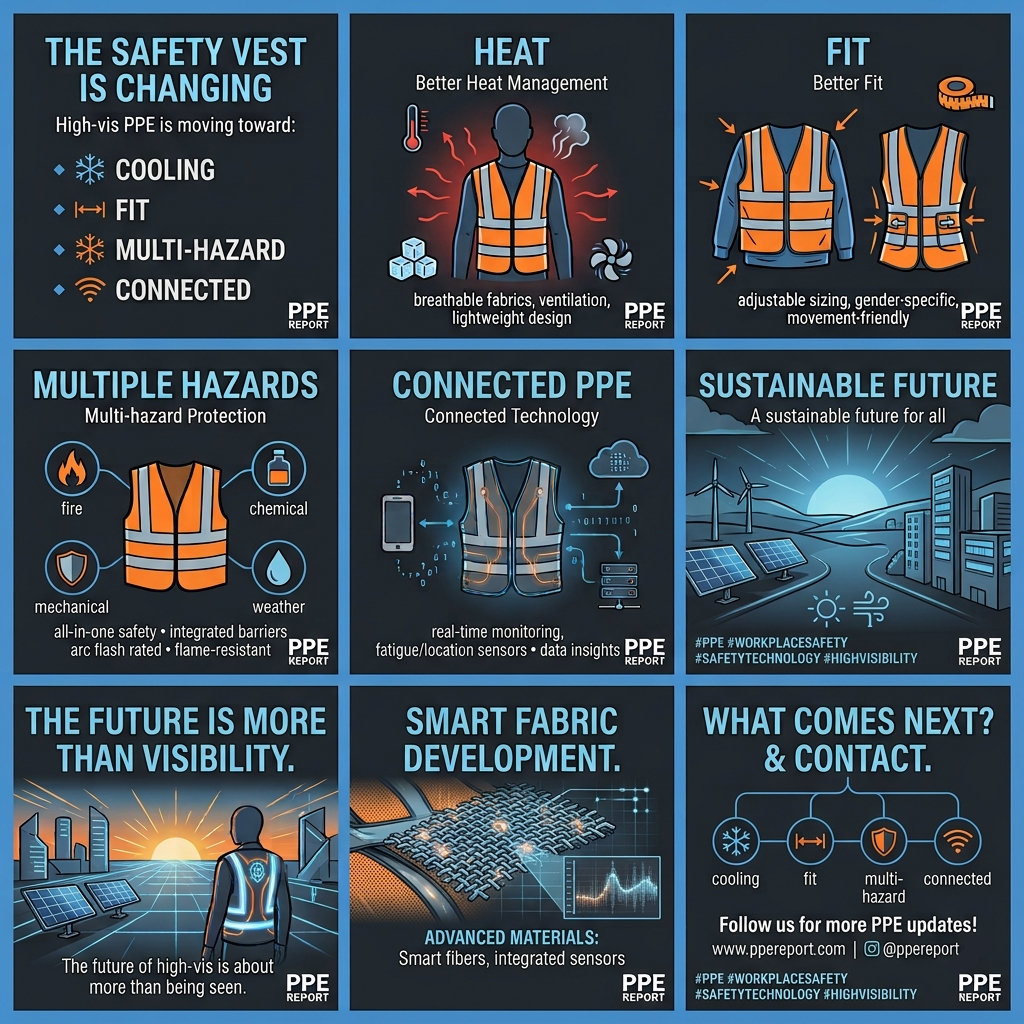
The Safety Vest Is Changing: 5 Trends Reshaping High-Visibility PPE

Share this story
High-visibility safety vest

WASHINGTON / LONDON — High-visibility PPE is no longer simply about wearing a fluorescent vest. Heat exposure, better fit, multi-hazard protection and connected technology are all influencing how high-visibility workwear is being designed and selected.

From traditional vests to complete workwear

The traditional safety vest remains one of the most recognizable pieces of PPE, but high-visibility workwear has expanded well beyond the basic vest. Today, workers use high-visibility shirts, jackets, rainwear, and trousers designed for specific hazardous working environments.

Heat and breathable materials

Heat exposure is an increasingly critical consideration for outdoor workers. Lightweight fabrics, mesh construction, and moisture management are now mandatory requirements, though reducing heat retention cannot compromise visibility standards.

PPE fit and workforce diversity

Properly fitting clothing allows workers to move freely without snag hazards. The proposed revision of ANSI/ISEA 107 includes updated sizing requirements and more precise measurement guidance to better accommodate workforce diversity.

Multi-hazard garments & Connected PPE

Combining flame resistance, arc flash protection, and visibility simplifies worker gear. Furthermore, connected sensors incorporated into garments support proximity detection and worker location tracking in high-risk zones.

Source: Occupational Health & Safety, “5 Trends Reshaping High-Visibility Workwear,” Sept 2026.

Read the original report at OH&S ↗

Editorial Statement & Standards

PPE Report is an independent journalistic platform covering personal protective equipment, regulatory compliance, and occupational safety. Content is provided for information purposes and does not constitute professional safety engineering or legal advice.

© 2026 PPE Report. All rights reserved.